Concrete Foundations & Footings
Strong structural foundations that support your buildings for decades to come.
Why Foundations Matter
Your foundation is literally what everything else rests on. A strong foundation keeps walls plumb, floors level, and prevents the structural problems that plague poorly built structures. Whether you are adding a room, building a garage, or constructing an accessory dwelling unit, getting the foundation right is not optional.
Here in Moorpark, we work with various soil conditions that affect foundation design. Some areas have stable soil that requires minimal preparation. Others have expansive clay that swells when wet and shrinks when dry, putting tremendous pressure on foundations. We know local conditions and design foundations that account for these challenges. When you need professional concrete work that stands up to local conditions, foundation expertise makes all the difference.
Types of Foundations We Install
Different structures require different foundation approaches. Here are the most common types:
- Slab-on-grade: Concrete poured directly on the ground, common for garages and single-story additions
- Stem wall foundations: Continuous footings with vertical walls, used for raised floors and crawl spaces
- Pier and grade beam: Individual footings connected by beams, good for unstable soil
- Monolithic slab: Footings and slab poured together in one piece
- Basement foundations: Full-height walls creating usable space below grade
The right choice depends on your building plans, soil conditions, and local codes. We work with engineers and architects to ensure foundations meet all structural and regulatory requirements. For simpler projects like sheds or small structures, we follow proven designs that have worked for years in similar situations.
The Foundation Construction Process
Building a proper foundation involves multiple steps, each critical to the final result. Here is how we approach your project:
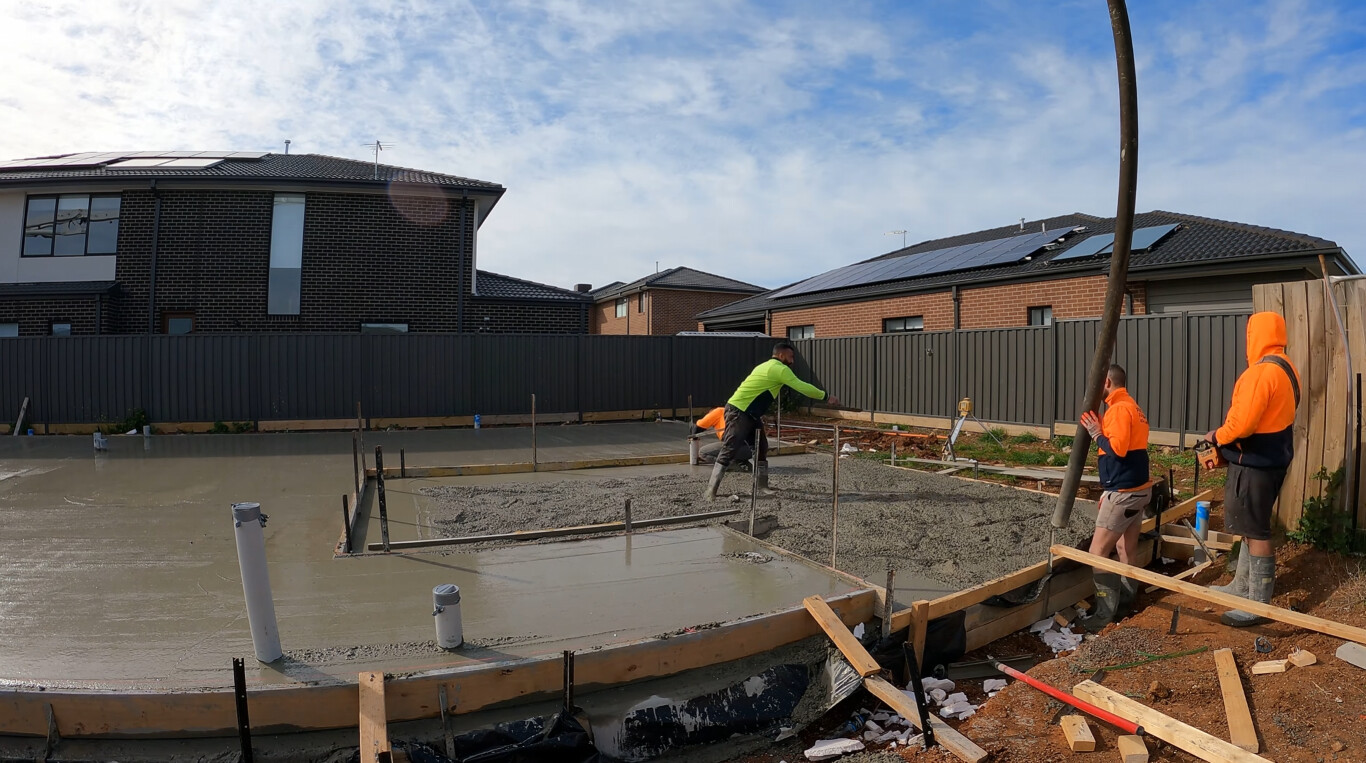
Everything starts with layout and excavation. We stake out the foundation footprint based on your building plans, then excavate to the required depth. This varies by building type and local frost line requirements. In California, frost is rarely an issue, but soil bearing capacity determines how deep we dig.
Footings come next. These are the widened sections at the base of foundation walls that distribute weight over a larger area. Footing size depends on soil strength and the load the building will impose. We install rebar in footings according to engineering specifications. This reinforcement is essential for preventing cracks and maintaining structural integrity.
After footings cure, we build forms for foundation walls. These must be precisely aligned and braced to hold their shape under concrete pressure. We place additional rebar in the walls, then pour the concrete. Proper consolidation with vibrators eliminates air pockets that weaken the structure.
Anchor bolts get embedded in the top of foundation walls while concrete is still wet. These secure the building framing to the foundation, a critical connection for earthquake resistance. We position them according to your building plans so they align with wall framing. Similar to our slab and flatwork projects, proper curing time is essential before any load is applied.
Working With Engineers and Permits
Foundation work almost always requires engineering and permits. This protects you by ensuring your structure is safe and built to code. The process typically works like this:
An engineer or architect designs the foundation based on your building plans and a soils report. The soils report tells us about bearing capacity, moisture content, and any special conditions that affect design. Without this information, we are just guessing.
We then submit plans to the city building department for permit approval. This can take a few weeks, so plan ahead. Once approved, we schedule inspections at key stages: after excavation, after rebar placement, and sometimes after the pour.
These inspections verify that work matches approved plans. Inspectors check rebar size and spacing, concrete mix design, anchor bolt placement, and other details. While inspections add time to the schedule, they give you confidence that your foundation meets professional standards. For additional structures or repairs, we also handle retaining walls and masonry work that may connect to your foundation.
Preventing Common Foundation Problems
Many foundation issues trace back to water management. Proper drainage is critical in Moorpark, especially during winter rains. Experienced cement contractors understand that getting drainage right from the start is far less costly than correcting moisture problems after construction is complete. Here are key considerations:
Grade your lot so water flows away from the foundation. This seems obvious, but improper grading causes countless problems. Water pooling against foundation walls can seep through over time, leading to dampness, mold, or even structural damage if soil erodes.
We install drainage systems when needed, like French drains or foundation drains that collect and divert water. Gravel backfill around foundations helps water percolate down rather than sitting against walls.
Control joints in slabs and foundations help manage cracking. Concrete will crack as it shrinks during curing. Control joints create weak points where cracks occur in straight lines, making them less noticeable and preventing random cracking throughout the slab.