Concrete Slabs & Flatwork
Solid, level concrete surfaces for sheds, equipment pads, and utility areas.
What Flatwork Includes
Flatwork is the term we use for any horizontal concrete surface. This covers a wide range of projects around your property. You might need a slab for a storage shed, a pad for an air conditioning unit, an RV parking area, or a workspace for equipment and tools. Whatever the purpose, the goal is the same: a flat, stable, durable surface that handles the load you put on it.
Good flatwork does not draw attention to itself. It just works. That means proper grading for drainage, adequate thickness for the intended use, and reinforcement where needed. When you need reliable concrete construction, flatwork projects are straightforward but require attention to detail.
Common Flatwork Applications
Here in Moorpark, we install concrete slabs for many different purposes:
- Storage shed bases: Level foundations that keep sheds dry and prevent rot
- Equipment pads: Solid surfaces for air conditioners, generators, or water heaters
- RV parking: Thick slabs designed to support heavy vehicles without cracking
- Workshop floors: Large slabs for hobby spaces, woodworking, or mechanics work
- Basketball courts: Precisely leveled surfaces with proper drainage
- Dog runs: Easy-to-clean concrete areas for pets
- Loading areas: Heavy-duty slabs for commercial deliveries or equipment access
Each application has specific requirements. An equipment pad for an AC unit needs to be perfectly level but does not require much thickness. An RV pad must be thick enough to support several tons without settling. The same principle applies to garage floor concrete, where thickness and finish choice directly affect long-term durability. We size and reinforce each slab appropriately for its intended use.
Proper Slab Construction
A concrete slab seems simple, but doing it right involves several critical steps. Cutting corners leads to cracking, settling, or premature failure. Here is our process:
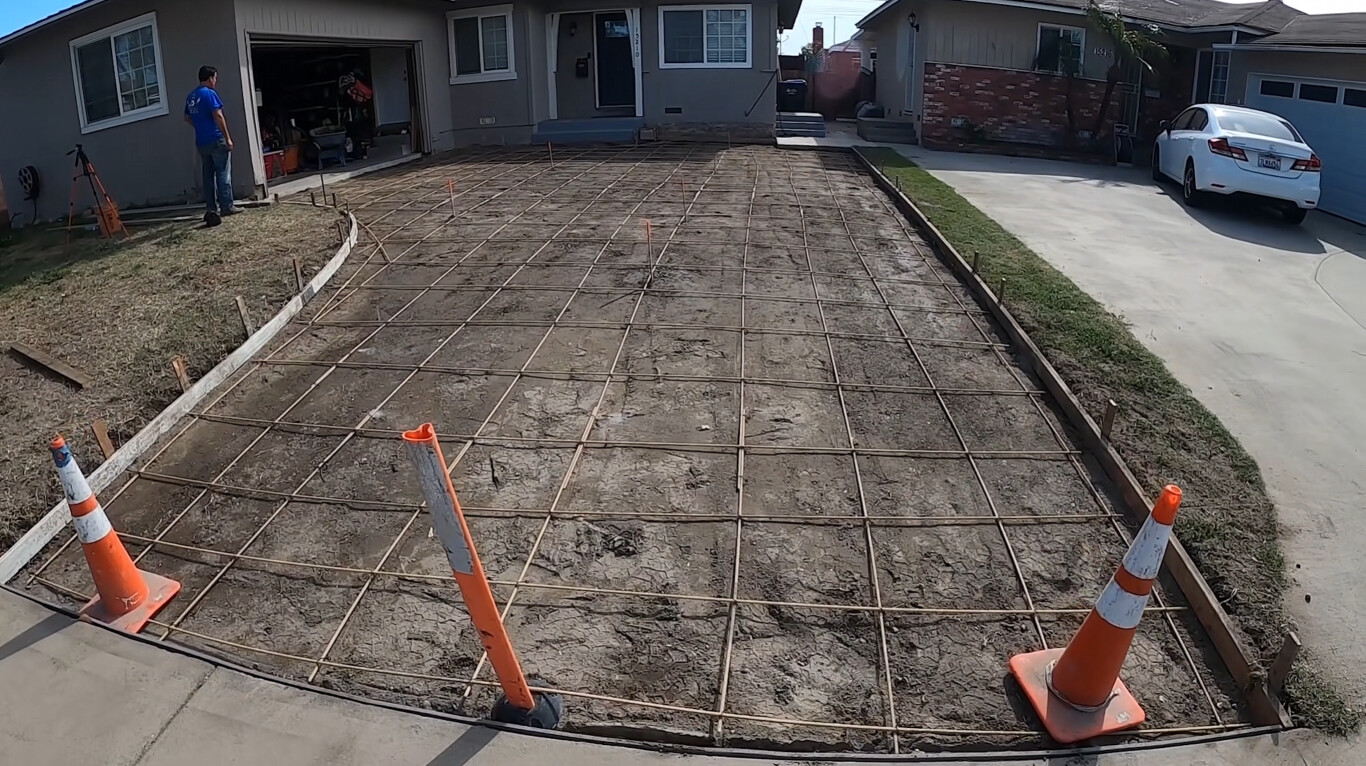
Site preparation starts with clearing vegetation and removing loose topsoil. We grade the area to ensure proper drainage away from buildings or other structures. The subgrade must be compacted to prevent settling. In some cases, we add a vapor barrier to prevent moisture from wicking up through the concrete.
Base material goes down next, typically 4-6 inches of compacted gravel. This provides additional stability and helps with drainage. We compact this layer thoroughly because a soft base will eventually lead to a cracked slab.
Slab thickness varies based on use. A standard shed pad might be 4 inches thick, while heavy equipment requires 6 inches or more. We install wire mesh or rebar for reinforcement, especially on larger slabs or those supporting significant weight. Control joints cut into the surface manage where cracking occurs, keeping it controlled and less visible. For projects requiring structural support like building foundations, we follow engineering specifications for reinforcement and dimensions.
Finishing Options for Flatwork
The surface finish depends on how you will use the slab. We offer several options:
Broom finish: The most common choice for utility areas. We drag a broom across the wet concrete to create texture. This provides traction and looks clean without being slippery.
Smooth trowel: Best for indoor applications or areas that need to be easy to sweep clean. The surface is glass-smooth but can be slippery when wet.
Exposed aggregate: Small stones show on the surface, creating an attractive, slip-resistant finish suitable for decorative applications.
For visible areas near your home, we can also use stamped or colored concrete similar to what we do for patios and entertaining spaces. This turns a basic slab into an attractive landscape feature.
Planning Your Slab Project
Before starting any flatwork project, think through these important factors:
Size: Make your slab larger than the minimum you think you need. It is much cheaper to pour an extra foot now than to extend later. Measure your equipment or structure and add several inches on all sides for clearance.
Location: Consider drainage, sun exposure, and access. Slabs should slope slightly away from buildings. Think about how you will get materials or equipment to the area during and after construction.
Utilities: Check for underground lines before excavating. We can help locate utilities, but you should notify providers before we start work.
Permits: Some slab projects require building permits, especially if they are large or will support structures. Any qualified concrete pad contractor should know local codes and handle permit applications when needed.