
Concrete Sidewalks & Walkways
Create safe, attractive pathways that connect your outdoor spaces.
Why Sidewalks and Walkways Matter
Your walkways do more than just get you from point A to point B. They guide visitors to your door, connect different areas of your yard, and keep foot traffic off your grass. A well-designed concrete walkway adds structure to your landscape and makes your property safer and more accessible.
Here in Moorpark, we see plenty of uneven or cracked walkways that create tripping hazards. Some were poorly installed from the start, while others have settled over time. If your current sidewalk has become a safety concern, replacing it is one of the smartest investments you can make. New concrete walks also boost curb appeal, which matters whether you are staying put or thinking about selling. When you need dependable concrete work for your property, walkways are an excellent place to start.
Types of Walkways We Install
Not all walkways serve the same purpose. We design and build different styles depending on your needs:
- Front entry walks: Lead from the street or driveway to your front door, typically 3-4 feet wide
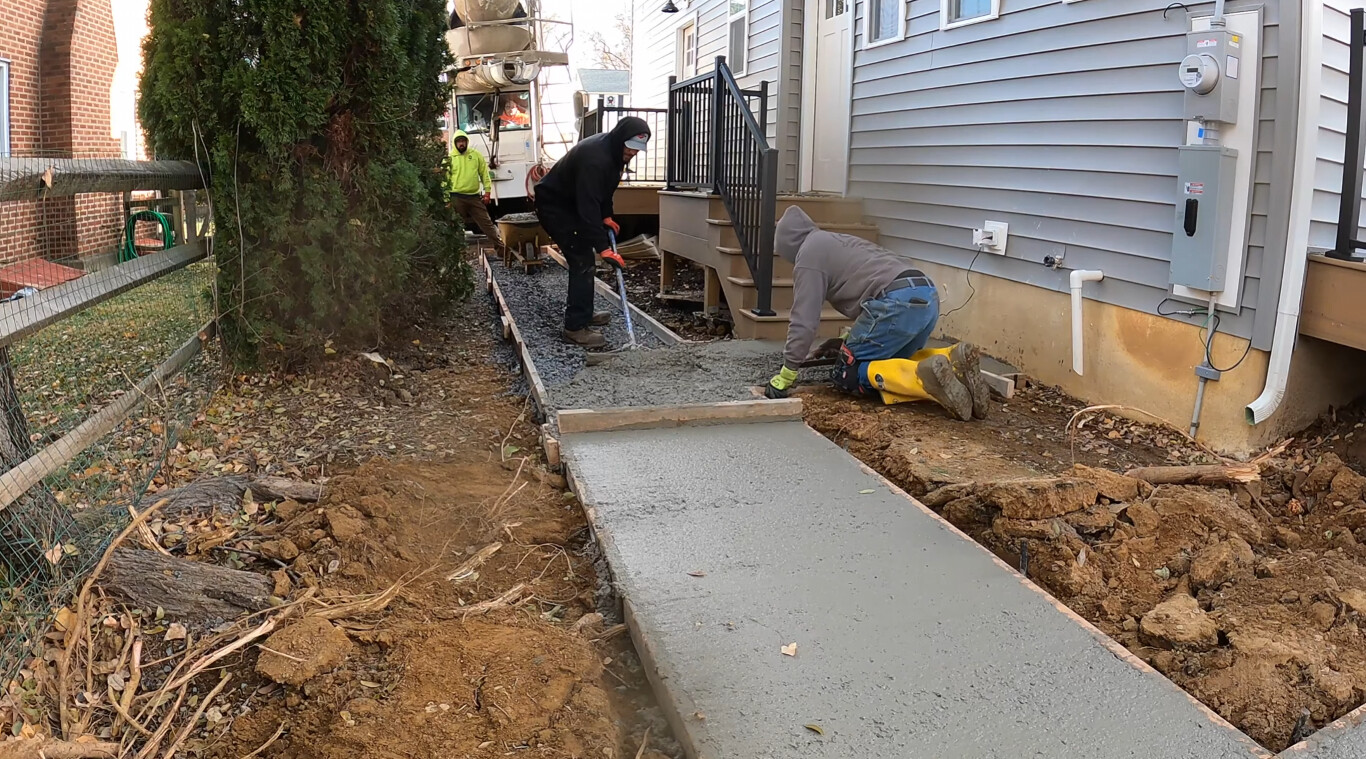
- Side yard paths: Connect the front and back of your property, usually 2-3 feet wide
- Garden walkways: Wind through landscaping and flower beds, can be curved or straight
- Pool decks: Surround swimming pools with slip-resistant textured concrete
- ADA-compliant ramps: Provide wheelchair and mobility device access with proper slope
Each type requires different considerations for width, slope, and finish. Front walks get the most visibility, so decorative options like stamping or coloring are popular. Utility paths need solid construction but can be more basic in appearance. We will help you choose what makes sense for each area of your property.
Building Walkways That Last
The secret to long-lasting sidewalks is proper foundation work. Many homeowners do not realize that what is under the concrete matters just as much as the concrete itself. Here is what goes into a quality installation:
We start by excavating to remove grass, roots, and loose soil. Depth varies based on your soil type and local conditions, but typically we dig down 6-8 inches. Then we compact the native soil to create a stable base that will not shift or settle.
Next comes a layer of crushed gravel or decomposed granite. This material drains well and provides additional stability. We compact this base layer thoroughly before moving on. Skipping or rushing this step is how walkways end up cracked and uneven within a few years.
Concrete for walkways is typically 4 inches thick, though we may go thicker for areas with heavy use or poor soil. We install wire mesh or rebar for reinforcement and create control joints every few feet to manage cracking. The surface finish can be broom-swept for traction, smooth for a clean look, or stamped to match other decorative concrete features on your property.
Design Considerations for Your Property
A walkway should feel natural and intentional, not like an afterthought. When planning your project, think about these factors:
Width: Main walkways should be at least 3 feet wide so two people can walk side by side. Narrower paths work for less-traveled areas but make sure they are still comfortable to use.
Slope: Walkways need a slight grade for drainage, typically 1-2 percent. This means water runs off rather than pooling. Too much slope makes walking difficult, especially in wet weather.
Curves: Gentle curves look more natural than hard right angles, especially in landscaped areas. However, people tend to walk in straight lines, so extreme curves may lead to shortcuts across your grass.
Integration: Your walkway should connect smoothly with existing driveways, patios, or other hardscape features. We pay attention to transitions so everything flows together visually and functionally.